

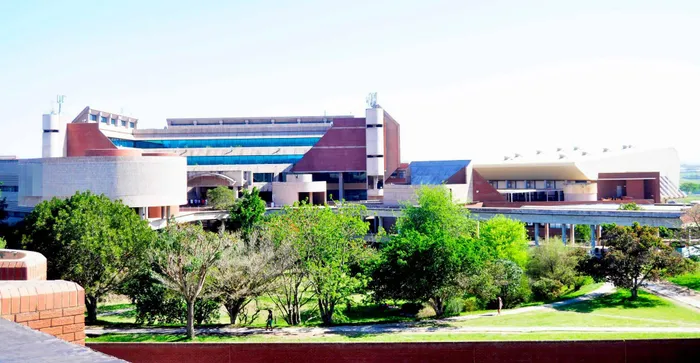
The South African Human Rights Commission (SAHRC) has released its final inquiry report into the protest and unrest at Walter Sisulu University (WSU), focusing on incidents on and around May 27, 2024.
Image: WalterSisuluUniversity/Facebook
THE Walter Sisulu University (WSU) neglected to activate required mediation processes while private security personnel carried out unlawful crowd-control actions, and the SAPS used force that fell short of legal standards, resulting in 14 students being injured during a protest.
These are the findings of the South African Human Rights Commission (SAHRC) final inquiry report into the protest and unrest at WSU, focusing on incidents on and around May 27, 2024.
The investigation drew on medical evidence, expert ballistics analysis, institutional submissions, and testimony from affected students, security personnel, the SAPS, and relevant oversight bodies.
The protest began as a peaceful, rights-based demonstration following a memorandum delivered by students on 23 May 2024.
Private security intervened the next day and fired rubber rounds and chemical agents at seated students. By 27 May, the protest had escalated and shifted toward the N2 highway, where students encountered SAPS tactical units that were not trained for public order policing.
Fourteen individuals required hospital treatment after sustaining protest-related injuries, nine of whom were confirmed students, and three sustained life-threatening injuries. The available photographic and ballistic evidence suggests that both rubber ammunition and prohibited 5.56 mm and 9 mm rounds were likely discharged.
“The Inquiry quickly revealed that 27 May did not erupt in isolation. It was the predictable outcome of festering grievances and institutional drift, compounded by a digital atmosphere thick with disinformation and official silence,” the SAHRC report noted.
The inquiry found that “isolated unlawful acts by some students”, did not remove constitutional protection from the wider assembly and protest.
“Students remained largely unarmed and peaceful until force was used against them. However, students also bear responsibilities. Some appear to have joined the N2 action without understanding its risks, others reacted to unverified online information, and some experienced intimidation or peer pressure,” the SAHRC said.
What accelerated the WSU confrontation was not a stone thrown on the N2, alone but also a rumour transmitted “through a mobile screen”.
“Shortly after 15:00 on 27 May 2024 a tweet falsely claiming that three students had been killed, accompanied by a 42 second video clip of automatic rifle fire lifted from an unrelated 2019 incident, went viral. Within the first news cycle the post accrued 262 500 views, 338 reposts, 289 replies, 665 likes and 324 bookmarks. Yet on 27 May the first authoritative rebuttal emerged only the following afternoon, long after the hashtag #WSUAmINext had trended nationally. Walter Sisulu University possessed CCTV footage disproving the killings rumour but released no statement for eighteen hours.”
While SAPS cited public safety concerns due to the highway blockade, burning tyres and reports of looting, evidence shows that officers untrained in public order policing resorted to force, including stun grenades, rubber rounds and ultimately live ammunition, before attempting any meaningful negotiation or facilitation.
“SAPS’s narrative of “warning shots into the ground” nevertheless appears to be belied by the medical evidence: deep tissue gunshot wounds to the thigh and buttock, a shattered femur and metal fragments lodged near vital organs.
"None of the students was reported as armed; many were seated or retreating when struck. Even if stones were thrown, the Commission is of the view that such conduct falls far short of the imminent lethal threat required under section 49(2) of the Criminal Procedure Act and the Walters standard. The State’s interest in clearing a blockage of the N2, serious though it was, could have been advanced by dialogue, by negotiated dispersal, or at worst by the phased measures. Instead, force which could’ve been lethal was introduced at an early stage by units ill-equipped for crowd management.”
The SAHRC called on the Department of Higher Education and Training (DHET) to issue a national directive requiring all universities to adopt constitutional protest management protocols.
Kamogelo Mogotsi, spokesperson to acting police minister, Firoz Cachalia said the ministry was yet to be “briefed by the National Commissioner on the matter” while the DHET committed to respond in due course.
WSU did not respond to requests for comment by deadline.
Cape Times