

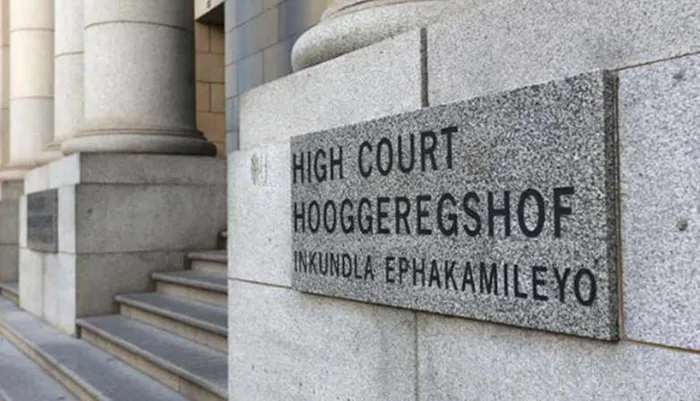
Judge President Nolwazi Mabindla-Boqwana, as well as presiding judges Judge Andre Le Grange and Judge Katharine Savage, heard arguments from the South African Property Owners Association (SAPOA), AfriForum, and the City.
Image: FILE
The Western Cape High Court was told on Tuesday that the City possesses broad powers, with no restrictions on the impositions it can make.
The court heard arguments concerning the City's fixed tariffs and its decision to link certain fixed charges to property values.
Judge President Nolwazi Mabindla-Boqwana, as well as presiding judges Judge Andre Le Grange and Judge Katharine Savage, heard arguments from the South African Property Owners Association (SAPOA), AfriForum, and the City.
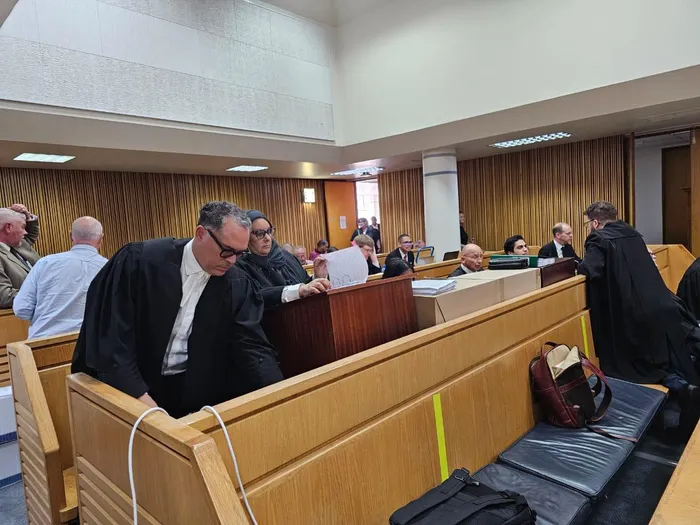
In its court application, SAPOA is asking for the city's three tariffs in the budget, namely the Cleaning Tariff, the Fixed Water Charge, and the Fixed Sanitation Charge be declared unconstitutional and invalid. Seen are the city's lawyers Advocate N Bawa SC (right), and Advocate N de Jager (left).
Image: Theolin Tembo
In its court application, SAPOA is asking for the three tariffs in the budget, namely the Cleaning Tariff, the Fixed Water Charge, and the Fixed Sanitation Charge be declared unconstitutional and invalid.
SAPOA’s membership currently comprises more than 90% of the country’s commercial and retail property industry, including some of the largest property-owning companies in South Africa.
AfriForum argues that the City “does not have the power to use the value of a property to determine any fees, surcharges, tariffs, taxes, levies, and duties (“tariffs”) other than a rate within the definition of and in terms the Local Government: Municipal Property Rates Act, 6 of 2004 (“the Rates Act”)”.
AfriForum wants to have the budget declared invalid until the end of the 2025/26 financial year, June 30, 2026, “to allow the City to rectify the defects” as it feels that the City does not have the power to use the value of property to do so.
The City has maintained that its fixed charges are not rates but service charges.
Tuesday's proceedings began with SAPOA and AfriForum citing various case law judgments to substantiate their claim, arguing that as soon as a rate/charge is linked to a value of property, then it is a rate.
They feel that the City seems to want to find a new definition for the term rate.
SAPOA’s lawyers argued that it makes a difference whether a levy is charged as a rate or as a service.
When it came to the cleaning tariff, SAPOA explained that as soon as the City “can’t link the cleaning services to any particular user, it should fall under rates”.
They said that their organisation has no difficulty in cross-subsidising the poor, but argued that there is a right way for the City to do that, which is through rates and not fixed service charges.
AfriForum, meanwhile, maintained that the case is about the legality of what the City is doing and what it wants to do. It explained that the City must exercise its powers within the legislative framework.
It is their argument that the imposition of fees and tariffs for services should follow a three-stage process. First, the adoption of a general policy sets out the framework for the determination of fees, charges, and tariffs. Second, a by-law must be passed, which gives effect to the policy. Third, a council resolution must be taken as it determines the actual content of the tariffs.
Other amici and intervening parties in the matter include the GOOD Party, Cape Town Ratepayers Association, and SA First Forum.
The SA First Forum argued the matter of affordability, stating that tariff increases fail. They believe that tariff increases bring anxiety to residents, wondering how they will afford the new tariffs, which are found to be totally unaffordable.
When the City had its turn, it argued that there is never going to be a policy in place that suits everybody.
It stated that research shows that there is a correlation between household income and property value, but stressed the point that they were referring to “household income, not personal income”.
It explained that there are specific rebates put into place (for pensioners and household income before R27,000), and that it caters for those affected by gentrification through rebates.
The City also stressed that there is nothing in the Constitution that says it can’t impose a fixed tariff. The City stated that it had “wide powers and that there is no restriction to what it can impose”.
The case resumes Wednesday morning.
Cape Times