

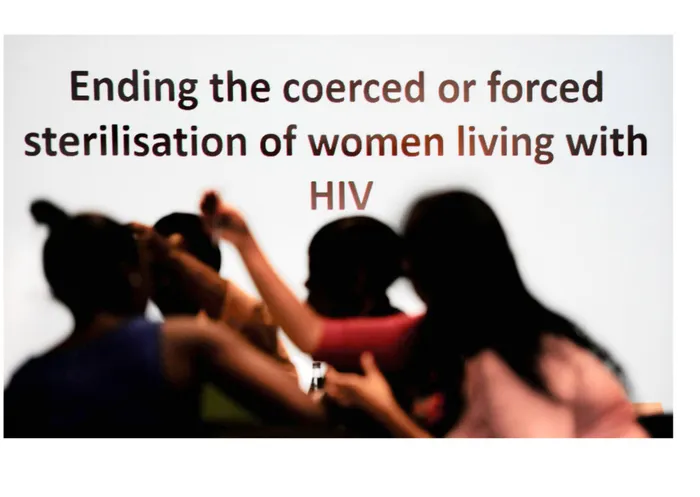
Parliament recently highlighted the failure to address the long-standing, systemic issue of forced and coerced sterilisation detailed by the Her Rights Initiative (HRI) during a briefing. The practice had been ongoing for more than two decades and many women continue to suffer lifelong physical, psychological, cultural and social harm.
Image: Chris Collingridge
THE majority of the black, impoverished HIV-positive women who were victims of forced and coerced sterilisation remain uncompensated and ignored.
As Monday marks World AIDS Day, Parliament recently highlighted the failure to address the long-standing, systemic issue detailed by the Her Rights Initiative (HRI) during a briefing. The practice had been ongoing for more than two decades and many women continue to suffer lifelong physical, psychological, cultural and social harm.
Researchers also noted that while several studies have been done around the issue, the women were yet to receive justice.
Sethembiso Promise Mthembu from HRI, is one of the victims of the practice. Her organisation represented 104 women from six provinces across South Africa, with their oldest case being a woman who was sterilised in 1997 and the latest case in 2021.
She said the health impact after the procedure was especially severe.
“A total of 27 women are on psychiatric medication, some have health complications, where operations have not healed in 15 years, sanitary indignity, women are incontinent. These are acts of violence not operations because women are dehumanised on the operation tables."
Mthembu added that from the groups she represented, there had also been three suicide attempts, one suicide was successful.
“There are also social implications, the loss of fertility, lobola is revoked, women lose marriages, it drives women further into vulnerability,” she said.
Women were also targeted through the prevention of mother-to-child programmes.
Professor Anne Strode from the School of Law at UKZN said in most cases they found women were coerced into sterilisation.
“They did sign, but they signed in coercive circumstances where their voluntariness was compromised. They feel they are in labour in hospital, so they are afraid if they said no, healthcare services would be withdrawn."
In many of the cases in their previous research, they found the sterilisation was linked to a caesarean, “some did not know (they were) signing for sterilisation".
Many women also only became aware of what happened to them after the sterilisation.
The organisation said more training was needed (among healthcare professionals) on what proper consent is.
“You should not be able to obtain consent on the day of the procedure. It is a significant decision being made,” Strode said.
Committee chairperson, Faith Muthambi, said: “This report reached Parliament during the 16 Days of Activism for No Violence Against Women and Children, a period when the nation reflects on the brutalisation and oppression of women and commits itself to action.
“The timing underscores the urgency and gravity of this matter. Forced sterilisation is not only a violation of reproductive rights. It constitutes a form of gender-based violence, discrimination and torture.”
MPs were also concerned by the lack of action taken by relevant government departments; the loss or destruction of medical records, and the lack of accountability for those responsible.
The committee has set its sights on calling several departments to account on the matter and demanding full reports on actions taken to stop the practice and accountability measures against those responsible. They also seek the recovery and preservation of medical records; plans for redress and compensation, provision of medical, psychological and social support for victims, as well as timelines for legislative reform, including amendment of the Sterilisation Act.
The Health Department said they were aware of the allegations which formed the basis of an investigation undertaken by the Commission for Gender Equality (CGE) published in 2020.
“Individual cases where details have been furnished to the Department are being reviewed in consultation with the relevant Provincial Department of Health. Each province has been requested to investigate each case which occurred in their province to ensure that complaints are provided with: Reparative surgery for those who had post-surgery complications, Post-trauma counselling and counselling and referral of those who are looking at Adoption as an option of having children. It should be noted that the CGE initially provided the department with a list of 48 names – contact details and permission to access medical records were received from 24 complainants,"said Health department spokesperson, Foster Mohale.
Cassius Selala, spokesperson for the Department of Women, Youth and Persons with Disabilities said they had engaged with the Department of Health on the issue of forced or coercive sterilisation.
“The DWYPD was advised that this matter is subject to judicial care and the process will be finalised once all judicial processes have been concluded,” he said.
Cape Times