

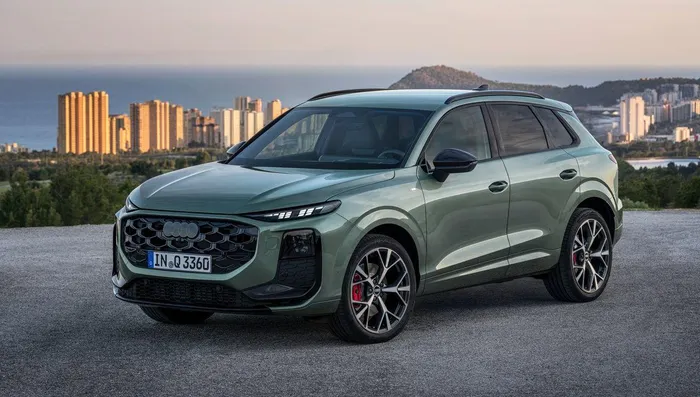
The new Audi Q3 is one of 11 new Audi models heading for South Africa in 2026 and 2027
Image: Supplied
South Africa’s premium vehicle market has seen a significant decline in the past two decades, as living costs spiral and customers face more choices than ever at the lower end of the market.
Premium vehicle sales in South Africa have fallen from around 90,000 units a year in 2013 to just 32,000 last year, with this segment of the market having bottomed out during the pandemic-related economic fallout of 2020.
However, Audi South Africa, which is currently the second-largest premium brand in the country behind BMW, sees this segment of the market stabilising in the 30,000 to 35,000 range for the remainder of this decade.
Speaking at a media roundtable event in Johannesburg this week, Audi South Africa’s head of retail and planning, Asif Hoosen, said that although premium vehicles have lost market share as a result of buy-down trends, there is still a very strong business case for the brand in this country.
“As a brand, we feel we’re good for a corridor of 20% to 25% market share,” Hoosen said.
“So we could range anywhere from 6,500 to 7,500 cars, essentially, and with that we can run a very good business in South Africa, and a very viable and profitable one too, not just for ourselves but for our dealers as well.”
Hoosen admitted that the company was competing with an ageing model line-up at present, but that is set to change in the coming years with 11 new models confirmed for the South African market in the next two years.
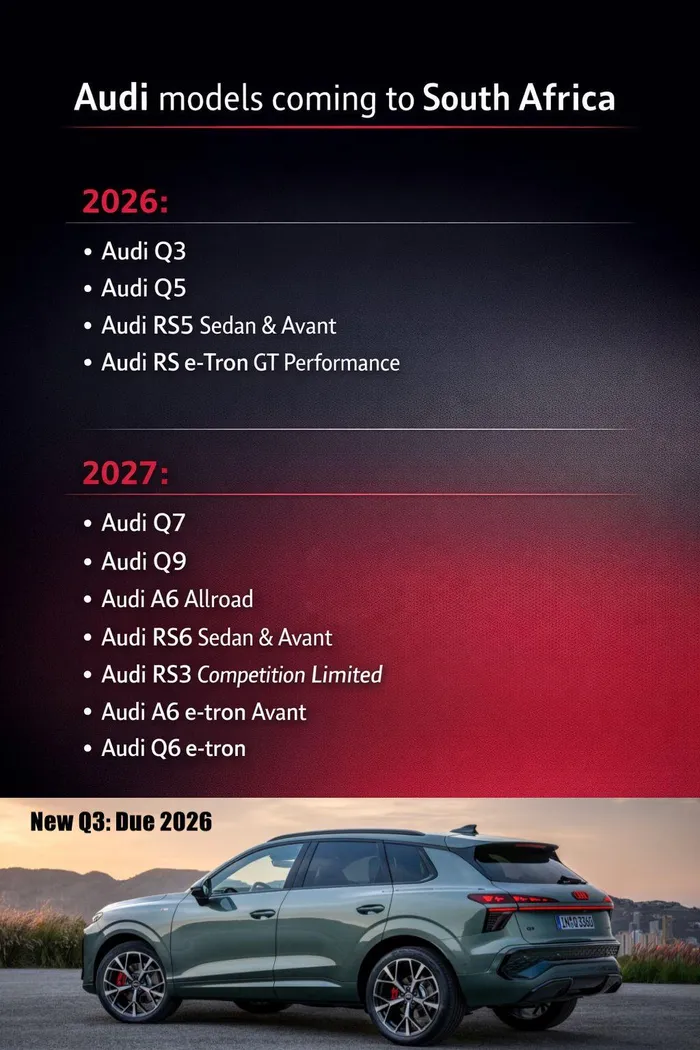
Audi's plan for the next two years.
Image: IOL
First in line is the new-generation Audi Q3 compact SUV, which is set to arrive around June or July 2026, sporting a striking new exterior design and a highly digitised cabin. And while many manufacturers are moving away from diesel engines, the new Q3 will still offer this option in addition to petrol units.
Also on the cards for the second half of 2026 is the all-new Q5 midsize SUV. Initially planned for 2025, the Q5 inherits much of the technology inherent in the new A5 sedan, including a new-generation Android-powered MMI interface and advanced mild hybrid engine technology.
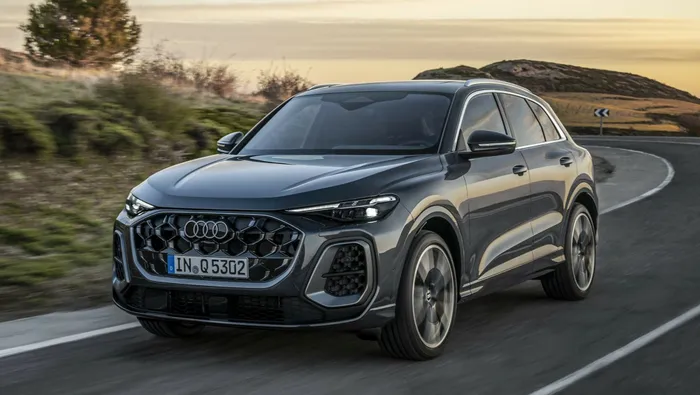
The third-generation Audi Q5.
Image: Supplied
But the most exciting introduction for 2025 will be the new RS5, which will be the firm’s first plug-in hybrid to be sold locally.
Pairing a 2.9-litre twin-turbo petrol engine with an electric motor, the RS5 produces a mammoth 475kW and 825Nm. Unlike the regular A5, the performance model will be available in both Sedan and Avant wagon variants.
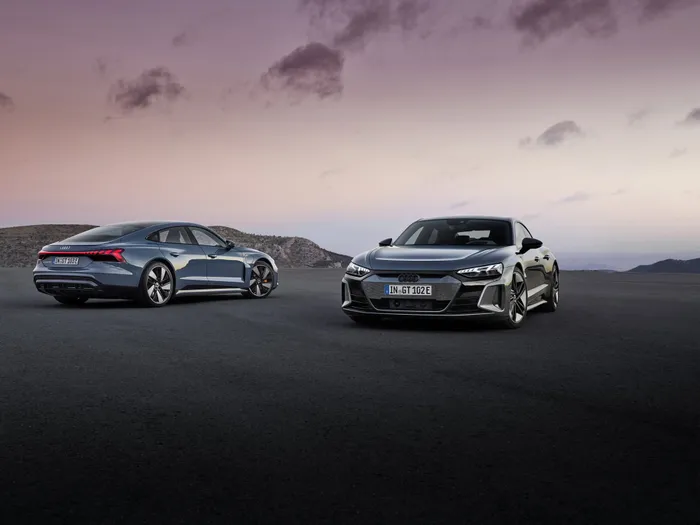
Audi e-Tron GT.
Image: Supplied
Finally, 2026 will also see the Audi e-tron GT Performance sedan becoming available on a “special order” basis. It features specialised “track-focused” features as well as an output of 680kW, an increase of 180kW over the regular GT.
2027 will be equally exciting for the four-ringed brand, with a new-generation Q7 and a new, larger seven-seat model called the Q9, which shares its platform. The latter will serve as a rival to the BMW X7 and Mercedes GLS. Both will continue to offer internal combustion engine options.
For those seeking a more car-like SUV, the new Audi A6 Allroad is also set to make landfall in South Africa next year.
On the performance car front, buyers can expect to see the new-generation RS6 Sedan and RS6 Avant models in local showrooms. Although they have yet to be revealed, word on the street is that they will adopt a new plug-in hybrid powertrain with outputs of around 520kW.
The RS3 Competition Limited edition is on course for South Africa too, perhaps as a last hurrah for Audi’s magnificent five-cylinder engine, which faces discontinuation due to impending emissions laws in Europe.
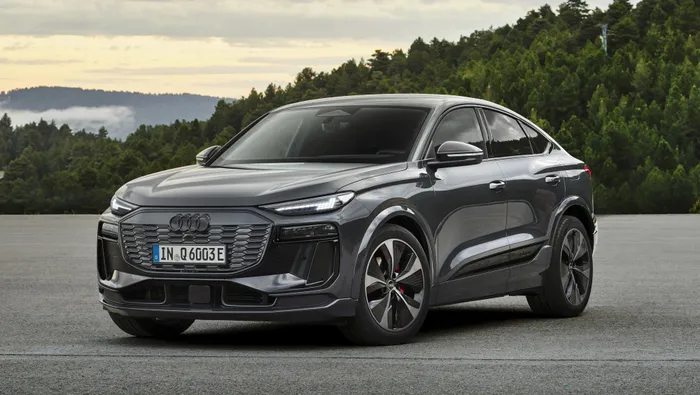
Audi Q6 Sportback e-tron.
Image: Supplied
On that topic, Audi will also take a second stab at the slow-growing electric vehicle market in South Africa, with the A6 e-tron Avant and Q6 e-tron, both of which are pencilled in for local introduction in 2027.
Asked if Audi was concerned about the rapid influx of Chinese vehicles entering the South African market, Hoosen said the brand was more focused on the things they can control than the things they can’t.
“We have been on the back foot a little bit with an ageing product lifecycle, but we are quietly confident we can improve in the second half of this year and beyond.”
He added that the brand has two key priorities going forward.
“One of them is loyalty and retaining what we have. Because given the reduced size of the market, it’s not going to be so easy to keep looking for customers and fighting for customers. But those customers who are with us and loyal to us, we have to work really hard to keep them in an Audi.
“The second part of it is, of course, trying to conquest a bigger share from the other competitors. We know that in some segments of the market, we don’t compete as strongly as we’d like. We could definitely get more share out of certain segments. It’s also dependent on the products that we offer, so part of the plan is bringing new products into the market in different segments to gain incremental share.”
The brand is also aiming to attract new customers by making its products more affordable through initiatives such as its Guaranteed Future Value deals, which operate much like a leasing deal, removing much of the risk for owners who would otherwise have finance on a balloon deal.
The brand is taking care of existing owners too, through a new Freeway Plan extension option, which allows owners to cover their cars for up to 15 years.
IOL Motoring