

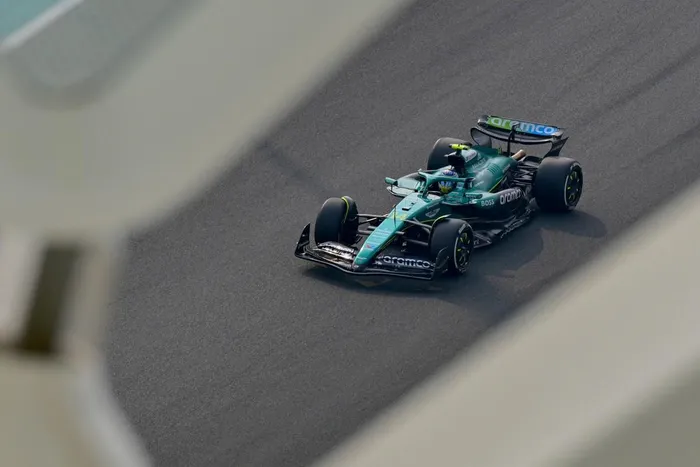
Despite the hype of the 2026 Honda works deal and the genius of Adrian Newey, Aston Martin’s pre-season has been a reliability nightmare. Photo: AFP
Image: AFP
A decade on from his salty McLaren-Honda reunion, Fernando Alonso appears to be suffering a cruel case of déjà vu. Only this time he’s dressed in Aston Martin green.
The Spaniard’s renewed partnership with Honda was supposed to signal a bold new era at Aston Martin F1 Team, a works-engine future built around championship ambition. Instead, early signs suggest the relationship has not sweetened with age. If anything, it has gone more sour.
For 2026, Aston Martin became Honda’s exclusive works partner under Formula 1’s sweeping new hybrid regulations. The deal is a long-term works agreement understood to run through the next regulation cycle and was designed to give Aston Martin factory-level integration, full technical alignment and a pathway to fight the established teams.
Owner Lawrence Stroll has invested heavily in facilities, personnel and infrastructure, pouring in what many describe as “big four” money in a bid to elevate the team alongside Mercedes, Ferrari, Red Bull and McLaren. This was meant to be the payoff year.
Instead, pre-season testing painted a bleak picture: minimal mileage, persistent reliability issues and worrying signs around energy deployment. Whispers in the paddock have also pointed toward a troublesome gearbox compounding the power unit headaches.
For Alonso, it all feels painfully familiar. Back in 2015, Alonso returned to McLaren as Honda re-entered Formula 1’s hybrid era. It was supposed to revive one of the sport’s most iconic partnerships. Instead, it became one of its most infamous misfires.
McLaren finished ninth in the Constructors’ Championship that season. Honda lacked experience and real-world data under the new regulations, while McLaren pursued an aggressive “size zero” chassis concept that left little room for cooling or development flexibility.
The result was chronic unreliability and a crippling straight-line speed deficit. At the 2015 Japanese Grand Prix, Alonso famously labelled the power unit a “GP2 engine” over team radio, calling the performance “embarrassing” and claiming they were roughly 30km/h slower than their rivals. Across three seasons with McLaren-Honda from 2015 to 2017, the two-time world champion failed to score a single podium.
Now, in 2026, Alonso finds himself in eerily similar territory. An unreliable Honda engine. Integration struggles. A car that looks intricate and ambitious but lacks the performance to match its promise.
This was also meant to be a statement year for Adrian Newey in his expanded leadership role. The Aston Martin challenger is said to be one of the most complex and aerodynamically ambitious cars on the grid, a machine designed to exploit every millimetre of the new regulations.
But complexity without cohesion can be costly. Right now, the package has failed to hit the mark. With rivals appearing sharper out of the blocks, 2026 is shaping up to be another season of damage limitation rather than domination for Aston Martin.
Despite the investment, facilities and star power on the pit wall and in the cockpit, the team risks fighting for midfield scraps. For Alonso, now in the twilight of his career, time is the one resource he cannot replenish. And once again, Honda is at the centre of the storm.
Jehran Naidoo is sports reporter with focus on motorsport for Independent Media and editor of the social media channel The Clutch