

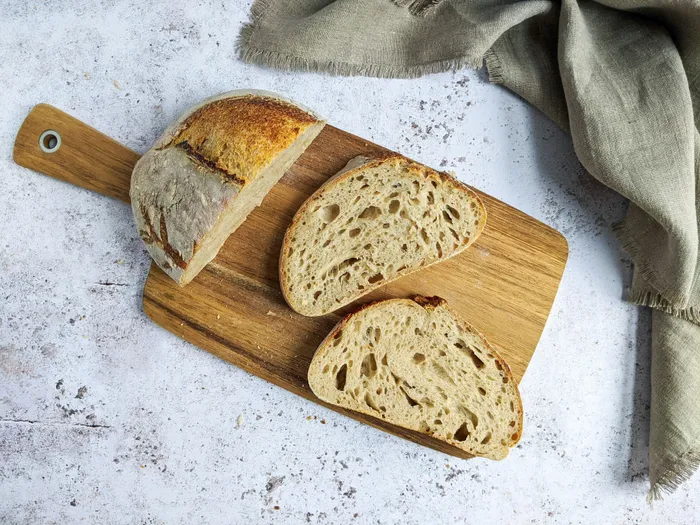
Discover the truth about sourdough and gluten, and learn how to choose the right bread for your dietary needs.
Image: Unsplash
If you’re thinking of cutting out gluten, you’ve probably wondered whether sourdough bread is safe.
With wheat-free diets becoming more popular among the health-conscious and people with digestive issues.
It’s important to ask: is the trendy loaf of sourdough bread truly gluten-free?
The short answer: not unless it’s specifically made that way. Let’s unpack exactly what’s going on, in plain terms.
Sourdough bread is made by mixing flour, water and salt with a “starter”, which is a living culture of wild yeasts and lactic acid bacteria. Unlike bread made with commercial baker’s yeast, sourdough uses this long fermentation process to leaven (rise) the dough through natural action of the microbes.
Because of the slower, natural fermentation, sourdough has a distinct flavour and texture, but also some interesting changes in how the flour is broken down.
Yes - if the bread is made with wheat, rye or barley flour, it still contains gluten. The fermentation process does reduce some of the gluten proteins and can break them down into smaller molecules, but it does not eliminate gluten completely.
There are several reasons sourdough can feel gentler on the stomach:
These factors can matter because many people avoid wheat not necessarily because of full coeliac disease, but because of gut issues or perceptions of gluten sensitivity.
For those people, sourdough might be a better choice than a standard white loaf, but it’s still not the same as a gluten-free bread.
So, while some people with mild wheat sensitivity may digest sourdough more easily, for someone who must avoid gluten entirely, the standard sourdough loaf is not safe.
There are sourdough breads made with gluten-free flours such as buckwheat, sorghum, rice or millet. These are safe for someone avoiding gluten, provided the production avoids cross-contamination and uses certified gluten-free ingredients.
So, if you’re following a strict gluten-free diet, look for the label “gluten-free sourdough” rather than assuming every artisan sourdough loaf qualifies.
For those following gluten-free or wheat-free diets, the key is to ask the right questions: what flour is used? Is it certified gluten-free? If the answer is “no” or “wheat flour”, then that loaf of sourdough is not safe for a gluten-free diet.
IOL Lifestyle