

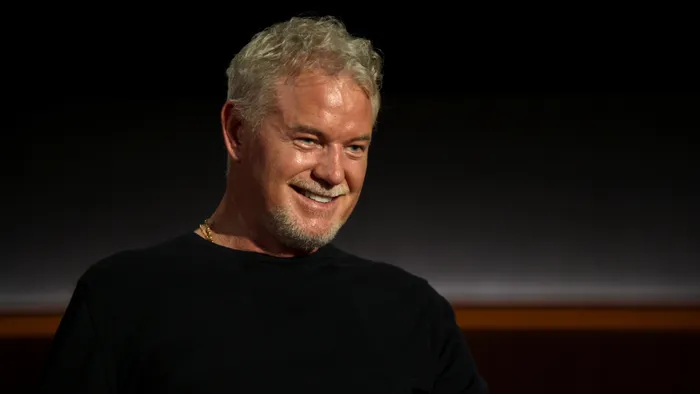
'Famous Last Words: Eric Dane' captures the actor confronting ALS while reflecting on life, love and fatherhood.
Image: Netflix
There is something no human can ever truly prepare for, and that is losing the people we love.
We talk about bucket lists. We talk about legacy. But what do we really hold onto? The last words. The final sentences. The way someone chooses to close their own chapter.
Netflix’s latest documentary, "Famous Last Words: Eric Dane", left me undone in a way I did not expect.
Before his death on February 19, which he knew was coming due to his battle with Amyotrophic lateral sclerosis (ALS), a brutal, body-stealing disease, Dane made peace with the inevitable in front of the world.
And somehow, he did it with grace, humour and honesty.
ALS narrows a life that once felt expansive. And watching Dane confront that reality is a sobering reminder of how fragile the body is, how quickly strength becomes memory.
It is wild how ordinary people become lessons for the rest of us. Sometimes I feel undeserving of those lessons. Why do we get to watch someone else’s goodbye as if it is a masterclass in courage?
But perhaps that is the point. We do not get to choose who becomes the example. We only get to decide whether we pay attention.
“There’s that moment when you peace out,” he says at one point, still finding humour in the face of something most of us cannot even name without trembling.
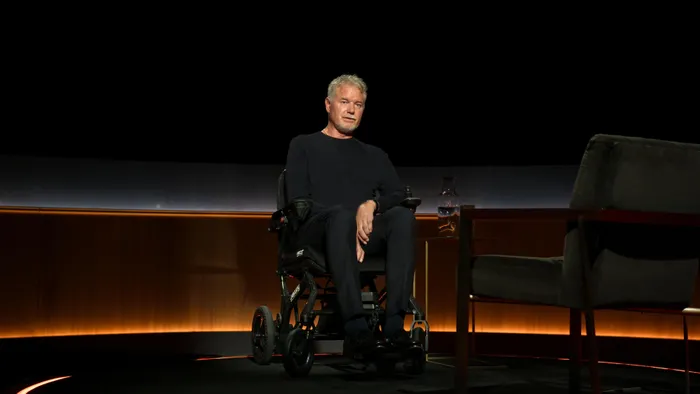
'Famous Last Words: Eric Dane' captures the actor confronting ALS while reflecting on life, love and fatherhood.
Image: Netflix
Even as his body weakens, his spirit refuses to shrink. He admits he has spent time complaining about small things, as we all do, but there is an awareness now, a recalibration of what actually matters.
What struck me most was not the diagnosis but rather his humanity.
Dane reflects on his father, who died by suicide, and the complicated legacy that he leaves behind. He speaks about loneliness, detachment and resilience. He calls himself a rascal. Sensitive. Empathetic. Persistent. A good dad. A man deeply in love with acting, his family and his friends.
We see someone at what should still be the height of his life, grown, accomplished, loved, wrestling with grief for the life he is losing while still expressing gratitude for the one he had.
That duality is uncomfortable to watch. Because it forces us to confront our own mortality. It forces us to ask: if we knew the clock was ticking loudly, what would we say differently?
The closing moment, where he addresses his daughters directly, reframes the entire documentary. It is not about celebrity. It is about fatherhood. It is about leaving behind words that might anchor someone years from now.
Dane speaks honestly about love, resilience and self-worth, reminding them that they are capable of handling life’s challenges with integrity. He urges them to embrace their emotions, to be kind to themselves, and to cherish the people who matter.
He reassures them that even when life feels unfair or overwhelming, they were, and always will be, enough. It is a father passing down lessons about courage, empathy, and authenticity, the kind of guidance that no school, book, or friend could fully teach.
And that is where the lesson sharpens. We often assume we will have time to evolve. Time to apologise. Time to express love more clearly. Time to become softer, more honest, more present.
Dane’s situation strips away that illusion. The documentary quietly asks: If you knew your time was limited, what would you prioritise differently? Who would you call? What would you stop pretending about?
It also challenges the way we define strength. Strength is not denial. It is not pretending everything is fine. In Dane’s case, it looks like acknowledging fear while still choosing gratitude. It looks like examining generational trauma instead of running from it. It looks like speaking plainly about love.
There is another subtle lesson woven through the film: that identity is more than physical ability. As his body changes, the core of who he is remains. His humour remains. His emotional depth remains. His capacity to reflect remains, and that matters.
Because so much of modern life is built around productivity, appearance and momentum. ALS strips all of that back. What is left is character.
Dane’s final reflections are intentional and measured. And perhaps that is the greatest takeaway: life is not measured only in years. It is measured in clarity, connection and courage.
Embrace the ordinary mornings. Call your parents. Say the thing. Stop waiting for a crisis to recalibrate your priorities. We do not get to choose how long we are here. But we do get to choose how honestly we live while we are.
Rating: **** a standout film with exceptional qualities.