

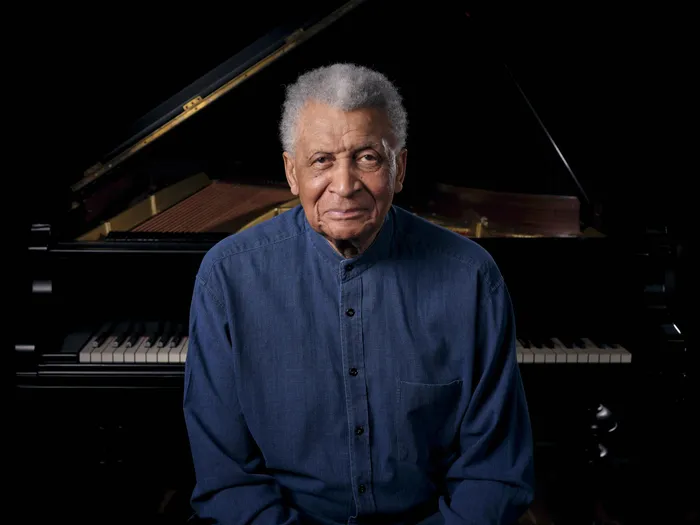
Legendary South African pianist Abdullah Ibrahim will be one of the headline performers at the Cape Town International Jazz Festival in 2026, bringing decades of musical history back to a stage in his home country.
Image: Supplied
The announcement that Abdullah Ibrahim will headline the Cape Town International Jazz Festival (CTIJF) this year immediately stirred excitement among jazz fans across South Africa.
For many, the news is not only about another performance on a festival stage. It is about history, memory and the living legacy of South African jazz.
The 23rd edition of the festival will take place on Friday, March 27, and Saturday, March 28, at the Cape Town International Convention Centre (CTICC).
Over the years, the festival has built a reputation as one of the most important music gatherings on the African continent, bringing together global stars and local icons.
Ibrahim’s presence on the 2026 line-up carries special meaning. Widely regarded as the greatest living South African jazz artist, the pianist and composer has spent decades shaping the sound of South African music.
His work blends traditional African melodies with church hymns and the language of jazz, creating a style that is instantly recognisable.
When the news broke on social media that Ibrahim would be part of this year’s festival, the response was immediate. Fans shared the announcement widely, and many rushed to secure tickets on Ticketmaster.
I was one of those who smiled when I saw his face on the line-up. My connection to Ibrahim’s music goes back to childhood. Growing up, my father would play his records loudly on weekend mornings while we cleaned the house and prepared for the week ahead.
Those moments formed part of the soundtrack of my upbringing. Through him, I discovered not only Ibrahim but also many of the artists who shaped South African jazz.
Names like Hugh Masekela, Miriam Makeba, Jimmy Dludlu, Caiphus Semenya, Don Laka and Jonas Gwangwa were regular voices in our home. Their music introduced me to a world that carried both joy and history.
As a member of Generation Y, I found myself drawn to Ibrahim’s compositions for reasons that went beyond nostalgia. His music carries a sense of place. The piano lines feel like conversations between the past and the present.
Even for listeners who did not grow up during the political struggles that shaped South Africa, the emotion in his music is easy to recognise.
Songs like “Mannenberg" remain powerful because of their deep connection to the country’s social history. The piece became an unofficial anthem during the struggle years and still carries a feeling of movement and resilience.
Other compositions, such as “The Wedding”, reveal another side of Ibrahim’s artistry. The music feels reflective and spiritual, drawing listeners into a quieter space.
What makes his return to the festival remarkable is his age. At 91-years-old, Ibrahim continues to perform and share his music with audiences around the world.
For fans, seeing him on stage is more than a chance to hear a familiar tune. It is a rare opportunity to witness a living archive of South African culture.
Artists like Ibrahim carry stories that stretch across generations. Their music has travelled through exile, political change and the rebuilding of the country’s cultural identity. Every performance becomes part of that continuing story.
That is why his appearance at the festival means more than just another performance on the programme. It represents a homecoming of sound and memory.
It is a reminder that South African jazz is not only about the past but also about the ways in which the past continues to shape the present.
For one night only, this legend will take over the Rosies Stage on March 27.
More information is available at the official CTIJF website (www.capetownjazzfest.com), while tickets can be purchased through Ticketmaster.