

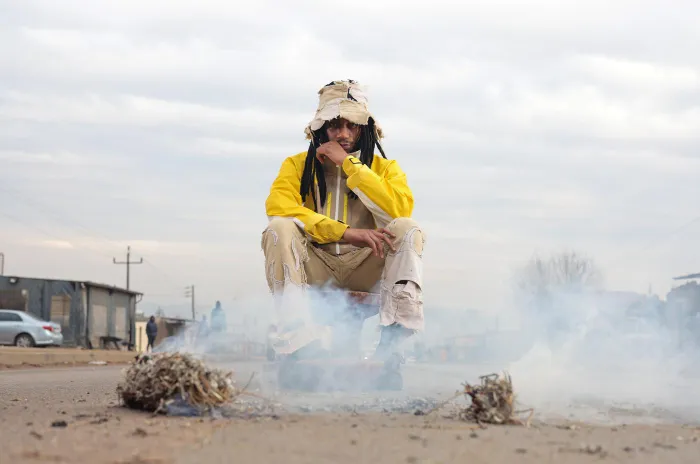
Thakzin has become one of the most recognised forces in South African music.
Image: Arthur Dlamini
Thakzin, born Thabang Mathebula, has become one of the most recognised forces in South African music.
His debut album, “Gods Window Pt.1”, marks a turning point in his career - not as a declaration of dominance, but as a gesture of service.
Known for innovation and his role in the rise of 3-Step, he positioned this project not as a showcase but as an offering.
“I wanted this album to take people on a journey,” he said.
“Honest music, spiritual music - from the start to the finish, no escape. You must go through every emotion. It is vulnerable, it is spiritual, and you must feel all of it.”
“Gods Window Pt.1” spans 18 tracks, structured as a passage through past, present and the future. It draws from ancestral rhythms, contemporary community and the ambition to build something new for generations to come.
Thakzin made it clear that this is not an album for passive listening. However, it is an experience that he hopes listeners will surrender to.
On the 3-Step and ownership
Many listeners and fellow artists often credit Thakzin as the creator of 3-Step, a sub-genre that has gained global traction in recent years. But he resisted any title that isolates him.
“I do not like the word king. I prefer pioneer,” he said. “This sound belongs to South Africa, to Africa. Yes, it was born here, it started here. But it does not belong to one person. It belongs to the world.”
He recalled speaking, three years ago, about the need for young producers to enter and mould the genre. Today, he sees those words unfolding.
“It is growing. Back then, I said, let the young kids come in and try this. It should be a young person’s game. Now it is happening: new kids are stepping in, bringing their own perspective and sparking conversations. We manifested this. And it will keep growing.”
He hopes that new entrants challenge the form rather than follow it. For him, growth is not repetition. It is evolution.
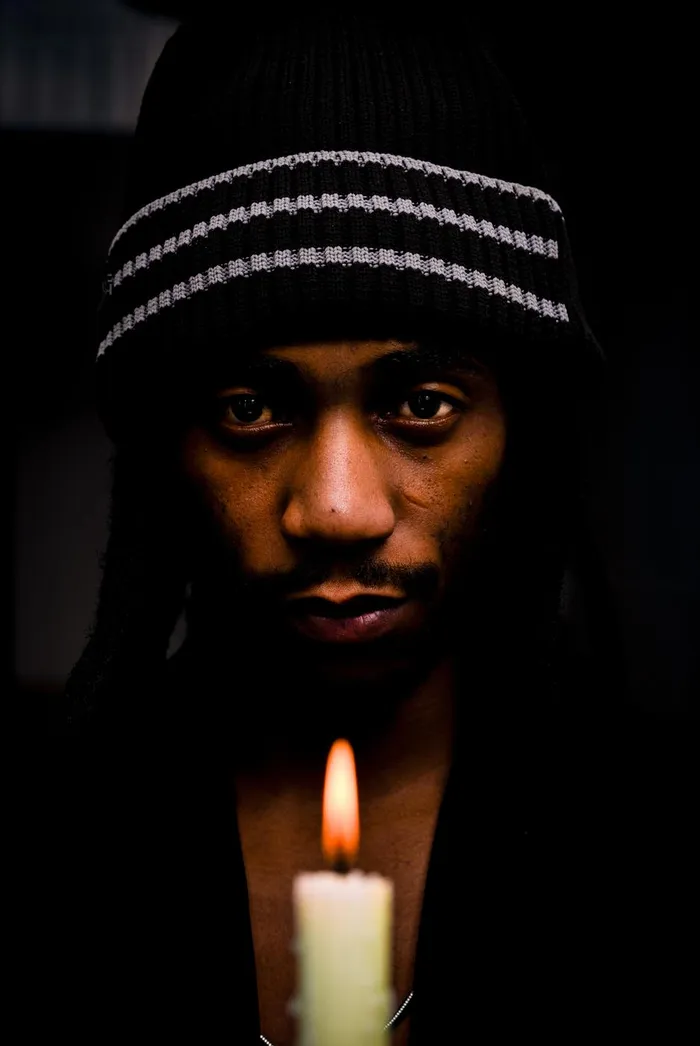
Thakzin has become one of the most recognised forces in South African music.
Image: Arthur Dlamini
Collaboration and cultural community
“Gods Window Pt.1” is rooted in collaboration. The album draws from Johannesburg’s communal culture, where studios are less about isolation and more about exchange.
“When you listen to the album, there is not one fixed direction or formula,” he explained. “Each song stands on its own. The people I worked with brought their own energy. They added their own voice to the story.”
A turning point during the making of the album was a studio camp that brought around ten producers into one space.
“We ended up with a track that had eight to ten people involved,” he recalled. “You could feel the flow of different energies. That is when I realised, collaboration does not just fill a space - it builds layers. It adds depth. It writes the story.”
For Thakzin, collaboration is not a strategy, but it is a heritage.
“Music is community. It always has been. Our ancestors made music together, not alone. We must keep that alive.”
Honesty, culture and pushing boundaries
Throughout the project, Thakzin speaks of “honesty in music” and “pure intention.” These ideas anchor his approach, not only to 3-Step, but to all future work.
“For me, it is about fully embracing our culture and our Africanness,” he said.
“When you come as you are, people may not understand it at first. But artists must learn to survive that space of not being understood. Eventually, they will find the right crowd. You do not change who you are to be understood.”
His message is clear: do not follow standards, but create them.
“You do not have to follow ‘how things are supposed to be.’ Make your own. Create your own vibe. Stand in it.”
Asked about what comes next, he did not pretend to hold a clear blueprint.
“I know parts of it,” he admitted. “But I cannot be Mr Know-It-All. I must allow the process to unfold. I must allow myself to grow. What I do know is that I will always push boundaries. That is what we are doing with 3-Step.”
People often debate where 3-Step falls - afro-tech, amapiano or something else entirely. For Thakzin, the answer is simple.
“It deserves its own league. We will create new things like that. For as long as I live, I will stand by that: pushing boundaries and expanding what is possible.”
Thakzin has become one of the most recognised forces in South African music.
Image: Arthur Dlamini
A global presence rooted in legacy
Thakzin’s rise has been global, with support from names such as Black Coffee, Louie Vega, Keinemusik and Laurent Garnier.
His music has reached BBC Radio 1 through Benji B, Gilles Peterson and Pete Tong. He has also performed at major festivals both locally and internationally. Yet despite international reach, he carries himself with restraint.
“I am a vessel,” he said. “The music is not for ego. It is a service. To the ancestors, to the people now and to those coming after us.”
Earlier this year, he was named one of Spotify Africa’s RADAR Artists, an honour that highlights him as one of the new torchbearers of African sound.
“It is not about the spotlight,” he said. “It is about responsibility. If we are seen, we must show something truthful.”
The three-part journey of “Gods Window Pt.1”
The album’s title reflects a panoramic vision - a high vantage point from which the past, present and future can be observed at once.
The past segment honours foundational African rhythms, rooted in drum, voice and dance. It reflects South Africa’s cultural legacy and the traditions that shape its sonic identity.
The present focuses on Thakzin’s own evolution: his community, his experiments, his tests and triumphs. It captures both struggle and hope.
The future imagines new forms - not only 3-Step, but paths beyond genre. It reaches for a sound that carries African creativity into global consciousness without losing its centre.
“I do not want to repeat history,” he said. “I want to continue it. There is a difference.”
A call to listeners
With this album, he does not seek to instruct, but to invite.
“Press play and let go,” he said. “Let the music speak. Let it take you. It is not about understanding everything. It is about feeling.”