

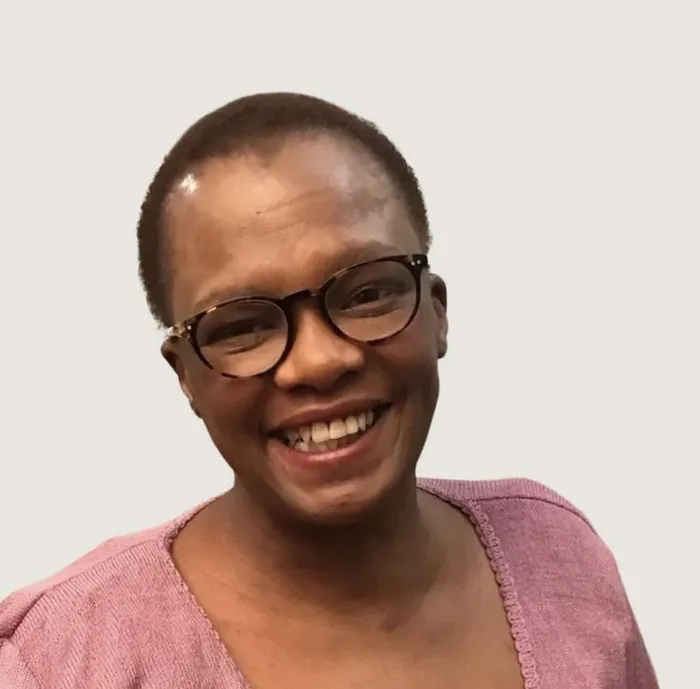
"And She Didn't Die" is directed and created by Khethiwe Ngcobo, the renowned author, political activist, and former KZN Legislature member, Lauretta’s daughter.
Image: Supplied
Documentary “And She Didn’t Die”, chronicling the life of novelist and liberation fighter Lauretta Ngcobo, showed at the Joburg Film Festival.
The film is directed and created by Khethiwe Ngcobo, the renowned author, political activist, and former KZN Legislature member, Lauretta’s daughter.
Khethiwe explained to IOL that her mother wrote a book called “And They Didn’t Die” about rural women, which is one of her most important works. The filmmaker reflected that she made the film because it tells an important story about KwaZulu-Natal and its people, and what they have given to the world.
“I think it's really touched people. It's an emotional story, which tells of a much bigger story, of us in the world and who we can be and who we are. A rural woman who grew up in the 1930s, went to Inanda Seminary, went to Fort Hare, and became an international writer when she went into exile.”
Khethiwe’s mother passed away in 2015, and creating the film has taken her most of her life to make. She had initially pitched the documentary in 2014, but it wasn't picked up by the people she pitched it to.
“For me, it's a catharsis to have now made it and told it and that it's being really, well received. We're going to be screening on the 20th of March at KZN Kwande Film Festival in Durban.”
“And She Didn’t Die” was made possible with funding from the KwaZulu-Natal Tourism and Film Authority (KZNTAFA), whose mandate is to grow the province’s creative economy and promote local storytelling.
Khethiwe remarked that she counts KZNTAFA as a critical partner in her filmmaking journey.
"I live in Joburg, but I am a filmmaker from the region, and they've always supported me, and I really appreciate that. Without them, I could never put my finances together. It doesn't quite work. If I shoot features and series, I inevitably shoot some of it in KZN. It's a really important partner, and I really wish they go from strength to strength."
As a film entrepreneur, Khethiwe is well aware of the challenges the industry is experiencing. She firmly believes that getting the rebates back is the first step. Rebates for the film industry in South Africa effectively stopped functioning between March 2023 and March 2024, leading to a severe ongoing crisis as of early 2026.
The Department of Trade, Industry, and Competition (DTIC) maintained that the incentive was open, but no new applications were approved, and adjudication meetings stopped in March 2024, leaving hundreds of millions of rands in payments unpaid.
“Our government has made agreements with at least 11 countries around the world, and these agreements are binding, and now they've broken that agreement, and so we have to get the rebate back because it's not just us who are not doing it, they're breaking their agreement with other government and we've got to make sure that we get the rebate back because the rebate stimulates the industry.”
Khethiwe brought to light how the ecosystem has gone with the loss of Showmax, with Canal+ pivoting and the SABC being an up-and-down institution, and Netflix is selective on who it takes on.
“Narrative as a tool means we can also tell our story to the world. We can go out to the world and say, this is who South Africa is. This is who we are, and if people understood who we were and we understood that actually, yeah, we've got problems, but we're actually great people.
“I think that that's something that the government has to do and change. We need to get our ecosystem right. We need to get marketing right; we need marketing to be supported. Because if you make something and there's no one, you don't tell anybody about it, it will stay in your bottom drawer.
“We really need to have ourselves, we need more distribution because if you've made it and you can't find who to give it to, what's the point? The ecosystem has to be improved. We're in a bit of a downer at the moment, but to be an entrepreneur, you have to be an optimist.”
Khethiwe reflected that this year’s Joburg Film Festival was different and had really improved, hitting a lot of great notes that relate to film entrepreneurs. “All the talks have been really insightful.”
She watched a few short films that were being screened and was blown away by what the young people are doing and how good the films are, but was reminded of how people aren’t seeing the content.
“I was like, oh, my God, we've got to find a way of exposing our stories and being told in our vernacular. It's not necessarily just the language; it's our tone of voice because some of them were speaking English, but it's our tonality. Young people have captured that, and they've captured storytelling.
“What Joburg Film Festival has done is elevated itself and made it accessible, but also made it relevant.”
IOL