

The City’s budget has faced backlash over its fixed charges, namely the Cleaning Tariff, the Fixed Water Charge, and the Fixed Sanitation Charge.
Image: File
The SA Property Owners Association (SAPOA) has slammed Mayor Geordin Hill-Lewis, accusing him of unfairly portraying property owners as being wealthy enough not to feel the impact of the tariffs.
SAPOA filed a replying affidavit in response to Hill-Lewis' court papers.
At the centre of the dispute, SAPOA is challenging the City’s fixed tariffs and their decision to link certain fixed charges to property values.
In its court application, SAPOA is asking for the three tariffs in the Budget, namely the Cleaning Tariff, the Fixed Water Charge, and the Fixed Sanitation Charge be declared unconstitutional and invalid.
SAPOA’s membership currently comprises more than 90% of the country’s commercial and retail property industry, including some of the largest property-owning companies in South Africa.
Initially, Hill-Lewis, in response to SAPOA’s court action, said that if they got their way, it would lead to a R4.2bn budgetary shortfall if all three fixed tariffs were set aside.
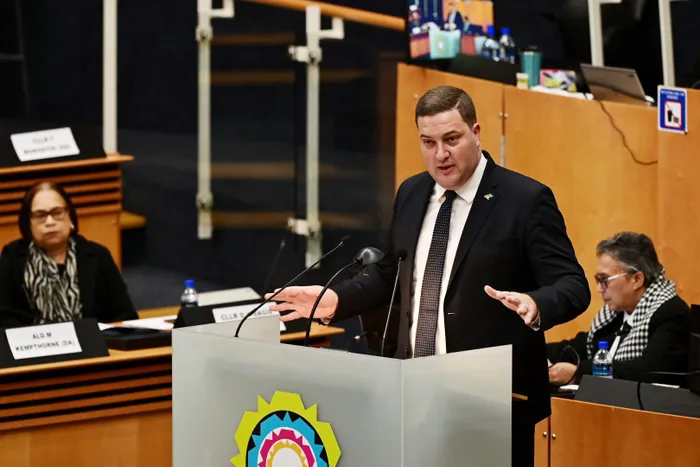
Cape Town Mayor Geordin Hill-Lewis.
Image: Supplied
SAPOA CEO Nilesh “Neil” Gopal, in his replying affidavit, said that “substantial portions of the answering affidavit (if not the bulk of the answering affidavit) are devoted to matters which are not remotely relevant” and that “SAPOA is not prepared to follow the City down into irrelevant rabbit holes”.
Gopal refuted the breakdown included in the City’s answering affidavit, which detailed the costs of delivering services. In their papers, the City detailed the total expenditure for debt impairment, depreciation and asset repairment, and employee-related costs, among other things.
Gopal said this breakdown does not fall in line with Section 74 of the Systems Act, which states “tariffs must reflect the costs reasonably associated with rendering the service, including capital, operating, maintenance, administration and replacement costs, and interest charges”.
“...The breakdown provided is for other categories of costs, namely employees; debt impairment; depreciation; general expenses; repairs and maintenance; bulk refuse; insurance; contracted services; activity-based recoveries; support charges; and other costs. This already shows that the City cannot justify the overall costs with reference to the categories listed in section 74(2)(d).”
He contends that, “Commercial properties got exempt (for a year at least) from the Cleaning Tariff and their contribution is now made through electricity surcharges imposed and added to the rates account, from where it presumably goes to pay for City-wide cleaning.
"For many property owners, their properties are bonded, with the result that the City’s valuation does not necessarily reflect the net asset value of that property," he said.
He argued that the City’s claim of a shortfall and that if its budget were unfunded, the resultant breaching of its legislated obligations as “alarmist and exaggerated”.
The case was initially set down for September in the Western Cape High Court, but has been postponed to December.
Lobby group AfriForum has subsequently taken similar action against the City.
Cape Argus