

File picture: Henk Kruger File picture: Henk Kruger
In the wake of the global #BlackLivesMatter movement that started in the US after the death of George Floyd, past and present learners from 20 Model A (private and self-funded) and Model C (semi-private) schools in Cape Town have taken to social media to protest against the blatant racism at their schools.
Within a matter of days, an Instagram account posting mainly testimonies of racist and homophobic experiences, had garnered a following of more than 10000. This comes as South Africa observes Youth Month and the 44th anniversary of the Soweto students' uprising.
The 1976 uprising started with students in Soweto rejecting the move by the then Department of Bantu Education to enforce the teaching of maths and science in Afrikaans at black schools.
The youth leaders were inspired by Steve Biko and his Black Consciousness Movement and their protests set South Africa ablaze for the first time since Sharpeville, 16 years earlier.
By the end of 1977, the Soweto uprising, which was quelled in a wave of repressive action, the government had banned 22 Black Consciousness organisations, had killed 600 people, including Biko while in police detention, and imprisoned thousands of activists and driven many into exile.
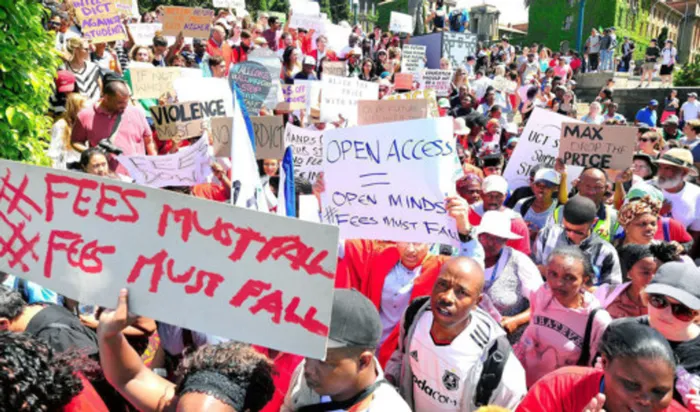
Forty years later, students on university campuses around the country were once again at the forefront of political protests, in what became known as the Fallist Movements of #RhodesMustFall followed by the #FeesMustFall movements. The assistant professor in history of southern Africa at Durham University, Anne Heffernan, observes that though these students may have changed the topic of conversation around education more effectively than any since 1994, and gains such as the outsourcing of jobs on campuses have been made, the movement to decolonise university curricula and faculty has not moved off-campus.
University of Pretoria Professor Siona O’Connell proposes that the student-led campaign served to draw attention to the fact that the power structure at the university bore little resemblance to the demographics of a post-apartheid South Africa and that our colonial and apartheid histories, pasts, and memories continued to be disavowed while our value as human beings continued to be denied.
Restructuring post-apartheid South Africa in order to address poverty and gross inequality, was always going to be complicated. The negotiated settlement involved significant compromises, such as the granting of amnesty to those who had perpetrated human rights abuses.
Professor and Head of the Thabo Mbeki African Leadership Institute at University of SA, Vusi Gumede, argues that the economic inequality in South Africa post-democracy remains high and is still a race issue, requiring a complete reconfiguration of society.
Nearly 50 years ago, while speaking about white racism and black consciousness at a conference in Cape Town, Biko stressed the same need to overhaul the whole system in South Africa before hoping to get black and white (who needed to address the inferiority and superiority complexes deliberately cultivated by the system) “walking hand in hand to oppose a common enemy”.
As South Africans we have yet to address the colonial and apartheid history of our country and to truly bring about restitution, thereby contributing to the healing of intergenerational trauma and substantiating the possibility of a re-imagined post-apartheid South Africa. Unless we take this opportunity to candidly learn from our mistakes and to consider what it means to be human, the hurts will not be healed.
* Dr Nadia Kamies is a Postdoctoral Fellow attached to the Department of History & Heritage Studies at the University of Pretoria.
** The views expressed here are not necessarily those of Independent Newspapers.
Do you have something on your mind; or want to comment on the big stories of the day? We would love to hear from you. Please send your letters to arglet@inl.co.za.
All letters to be considered for publication, must contain full names, addresses and contact details (not for publication).
IOL is committed to freedom of speech as long as it is not derogatory or harmful to others.
Connect with us on Facebook, Twitter or Instagram to join the conversation.