

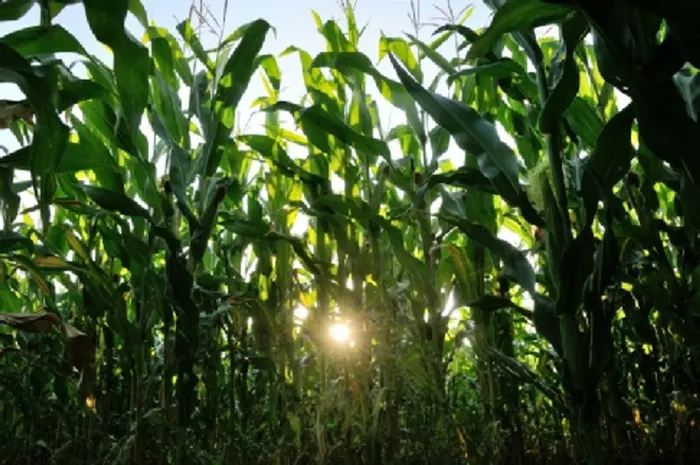
South Africa is expected to record its largest summer grain and oilseed harvest on record in the 2025–26 season.
Image: Supplied
Despite tensions between South Africa and the US – with US President Donald Trump apparently having recently increased the Afrikaner refugee quota – the two countries are working together on a mining project.
A mine, set to start production in 2028, is the target of a joint relationship that will see the US provide $50 million in funding out of a total of $317 million to produce a material that will help the US in its bid to source rare earth minerals outside of China.
The Phalaborwa Rare Earths Project is a long-life, low-cost project located in Limpopo and contains among the highest quality rare earth projects globally.
It will reprocess gypsum wastes from legacy mining activities to extract, process, and separate rare earth oxides for downstream use in permanent magnets, the US International Development Finance Corporation (DFC) said.
While not stated on any of the participants’ websites, gypsum has another potential role: it is used as both a soil conditioner and a fertiliser, though it is primarily valued for improving soil structure.
The mine’s use in agriculture can be traced back to 1964, when it was owned by Federale Volksbelegging, a company that produced phosphate-based fertiliser, reported Ox Peckers.
Gypsum is a soft, naturally occurring mineral widely used in construction as the primary component of plaster, drywall, and cement, and in agriculture as a soil amendment to break up clay and supply nutrients.
The increased interest in South Africa’s rare earth minerals – demand for which is being driven by environmental concerns - coincides with rising fertiliser costs linked to global supply disruptions.
Investing.com noted these input costs are increasing pressure on food production, with potential knock-on effects for inflation. Statistics South Africa said last week that the annual inflation rate for food and non-alcoholic beverages slowed further to 3.6% in March from 3.7% in February and 4.4% in January.
Yet, there are concerns among economists that food inflation will increase due to various factors caused by the Middle East war. One of these, Investing.com noted, is a said a spike in nitrogen-based fertiliser prices.
Investec chief economist Annabel Bishop has noted that rising food prices internationally “will place upwards pressure on domestic food price inflation from April”.
South Africa is expected to record its largest summer grain and oilseed harvest on record in the 2025–26 season, supported by favourable rainfall and expanded plantings, according to Agbiz chief economist Wandile Sihlobo.
According to the DFC, global demand for magnets derived from rare earth oxides is expected to increase by 7.5% annually through 2040, driven by growth in electric vehicles, renewable energy systems and high-tech manufacturing.
The Corporation said mining contributes about 8% to South Africa’s gross domestic product, although output has fallen below pre-pandemic levels due to electricity shortages, logistics constraints, inflation and currency volatility.
“The project is expected to support South Africa’s production and export of rare earth oxides and create full-time local jobs,” said the DFC.
Another key rare earth project is the Steenkampskraal Mine in the Western Cape, already a focal point for neodymium and praseodymium. These are essential components for the permanent magnets found in electric vehicle (EV) motors and wind turbines.
IOL BUSINESS